Publication date:2026/05/21
Revision date:2026/05/22
While there are many areas in Japan that receive a lot of snow, the “Aizu Bandai” area, centered around Mt. Bandai, is widely known as a place that consistently gets light, premium-quality snow.
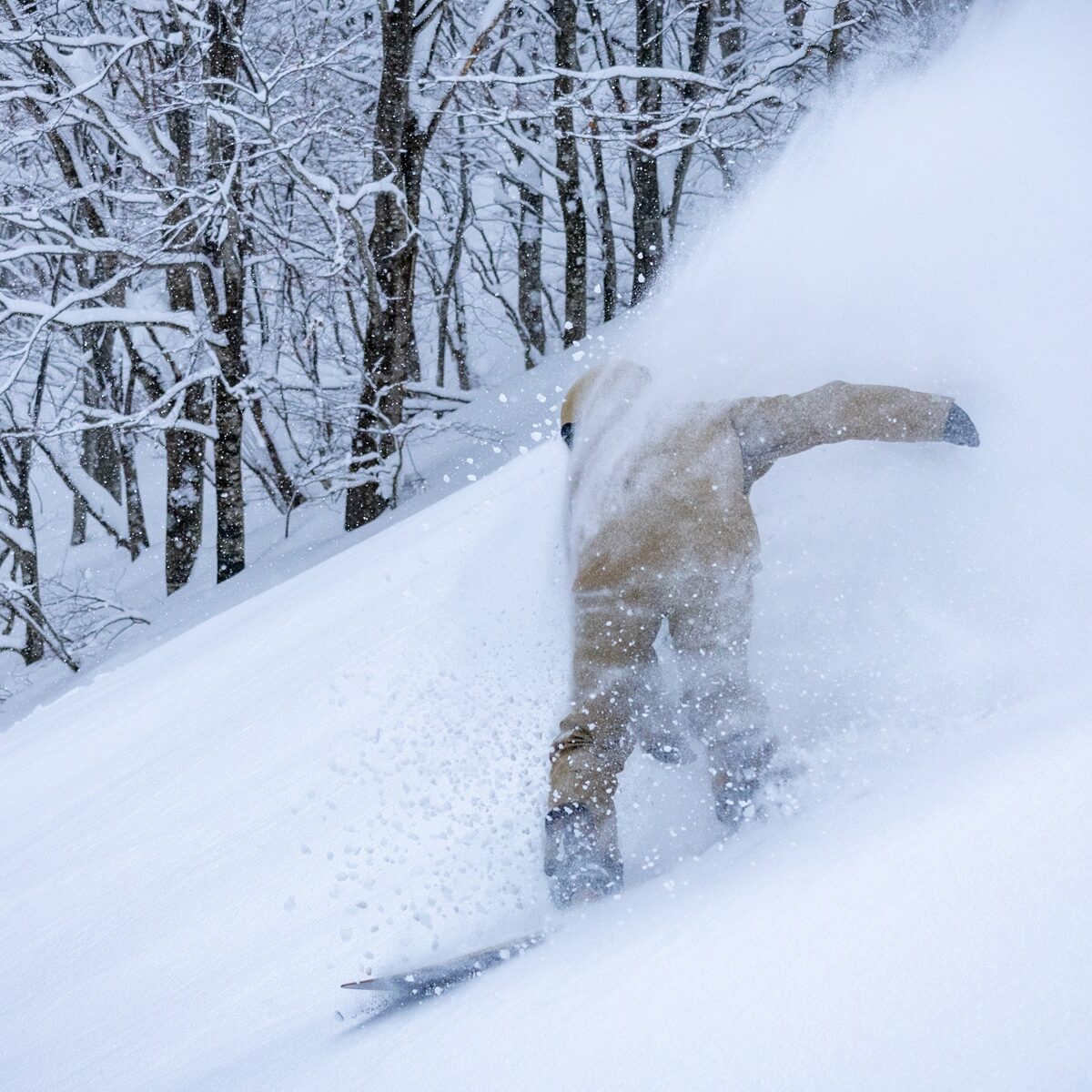
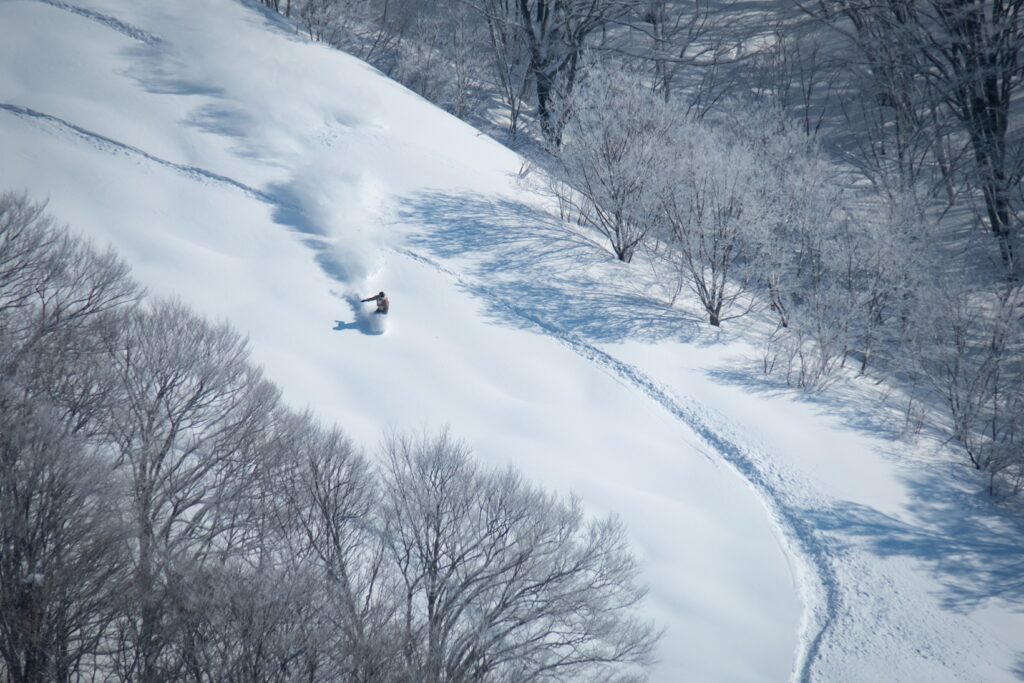
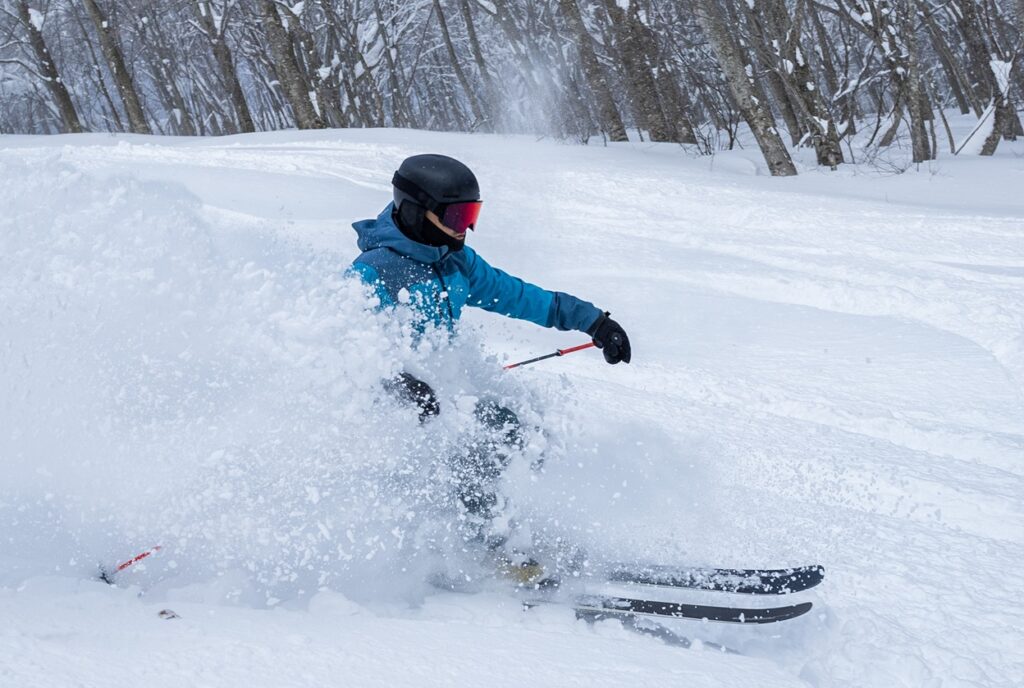
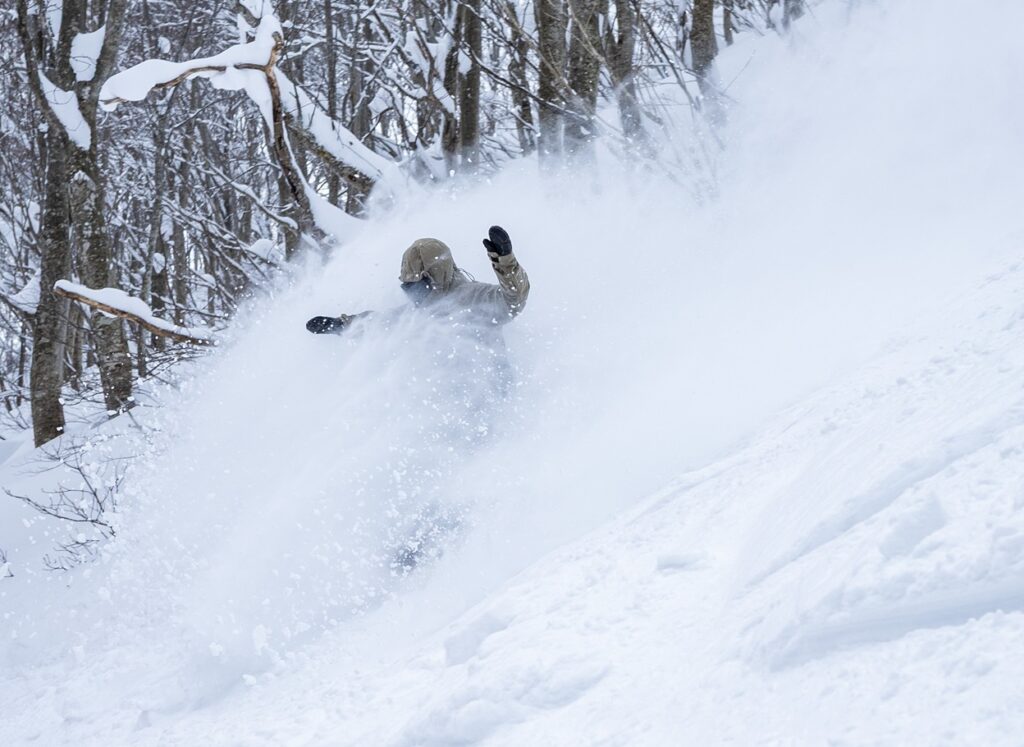
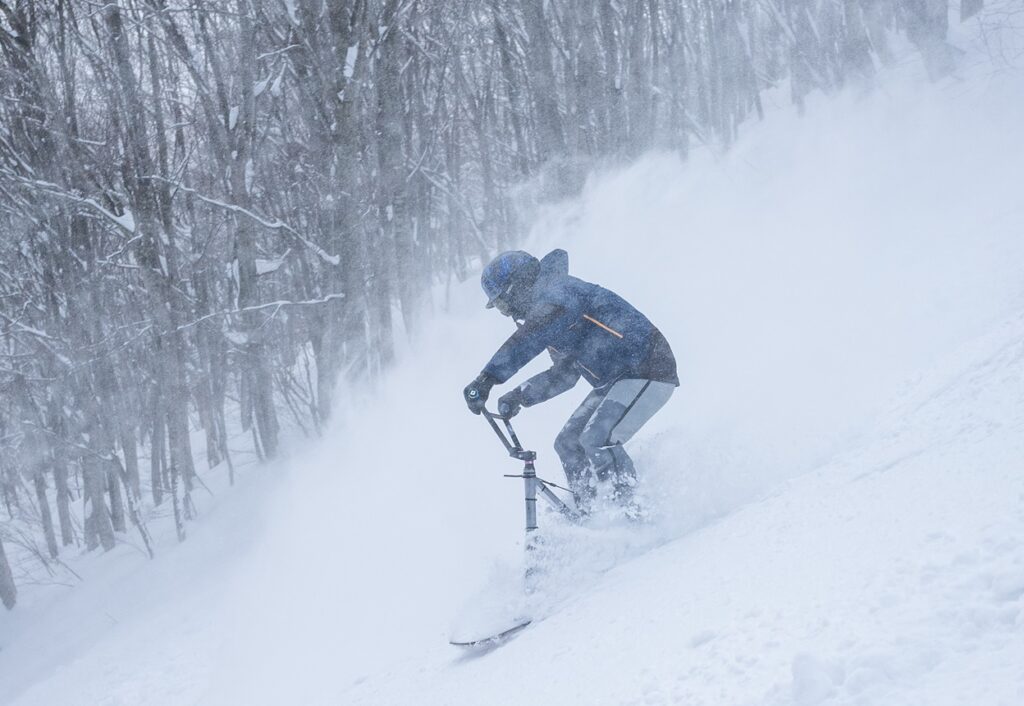
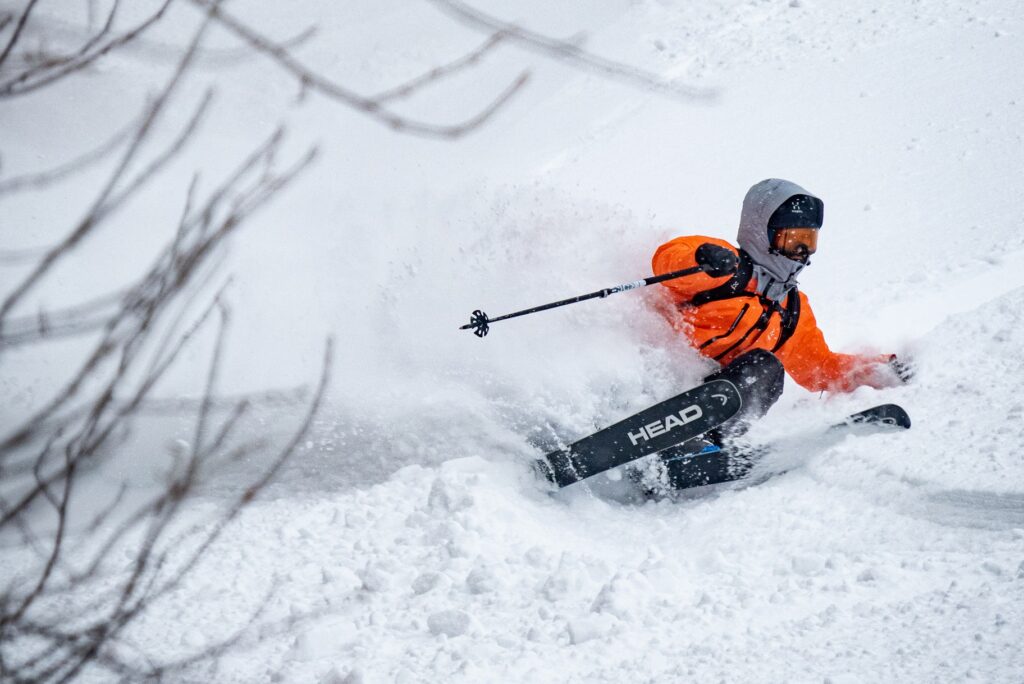
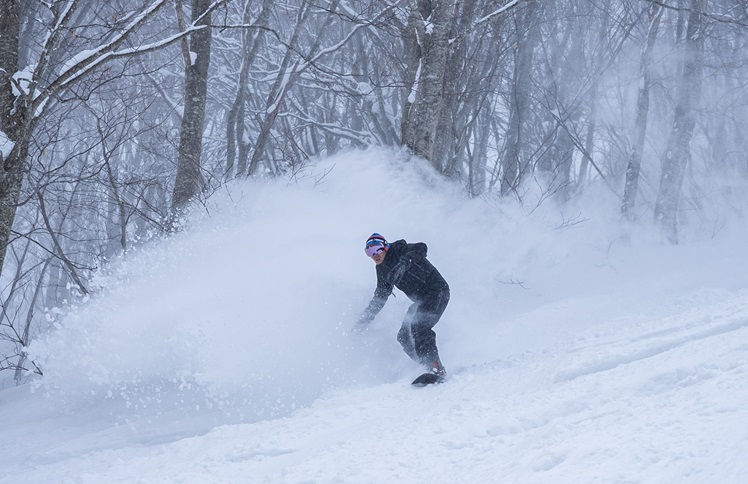
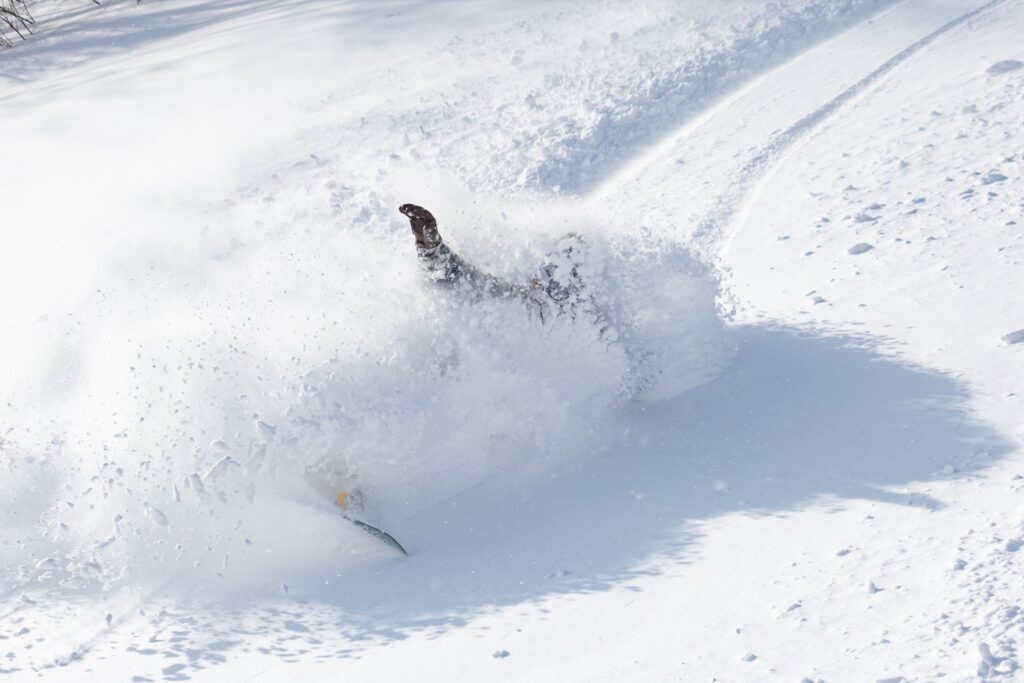
Fresh snow in Aizu Bandai is so light that it trickles right through your fingers when you try to hold it, and when riding, it kicks up around you like smoke. Why does this region get such dry “micro-fine snow,” despite being located on Japan’s main island of Honshu?
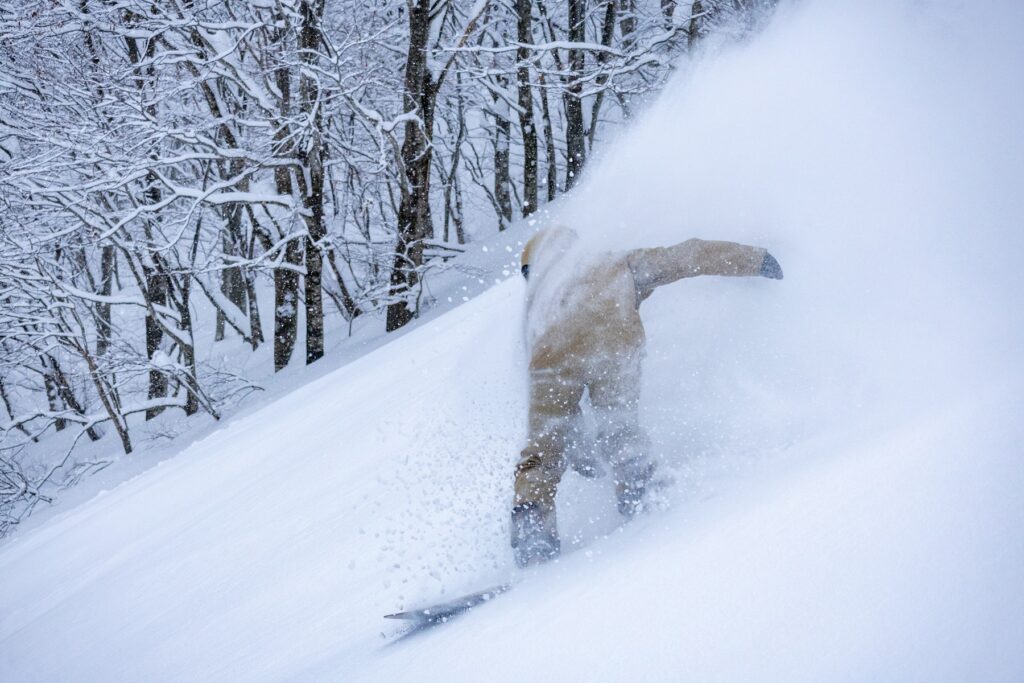
During winter in Japan, the wind blows from the west on most days. This wind picks up a massive amount of moisture as it crosses the Sea of Japan. If this air mass hits mountains immediately, it dumps heavy, moisture-laden snow. This is why coastal regions along the Sea of Japan get a lot of snow, but it tends to be so heavy that it traps you in place.
However, standing right before the Aizu Bandai area are towering 2,000-meter-class mountain ranges, including the steep Iide Range and the Echigo Mountains. As snow clouds from the Sea of Japan pass over these peaks, they drop their damp snow first, effectively squeezing out the moisture. In short, the preceding mountains act as a “dehumidifying filter.” Only the premium, dry, cold air that has passed through this filter reaches this area. When it collides with Mt. Bandai, it brings ultra-dry powder snow.
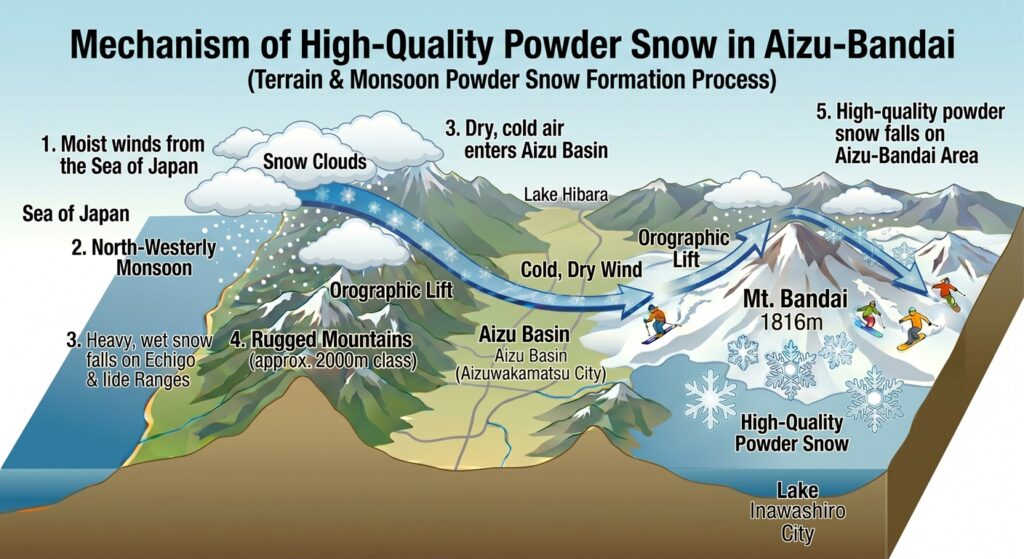
No matter how light the snow is when it forms high in the atmosphere, if the ground-level temperature is high, the snow accumulating on the slopes will become damp and heavy. The advantage of Aizu Bandai—especially the region known as Urabandai—is its high altitude combined with its highland basin geography.
Resorts located in Urabandai, such as Nekoma Mountain’s North Area and Grandeco Snow Resort, have base elevations reaching 1,000 meters. Furthermore, being surrounded by tall mountains, cold air pools in this basin, while the frozen Lake Hibara at its center reflects sunlight away. Thanks to these factors, temperatures drop to double-digit negatives during the peak season, ensuring that snow crystals never melt and line the slopes in a perfectly dry state.
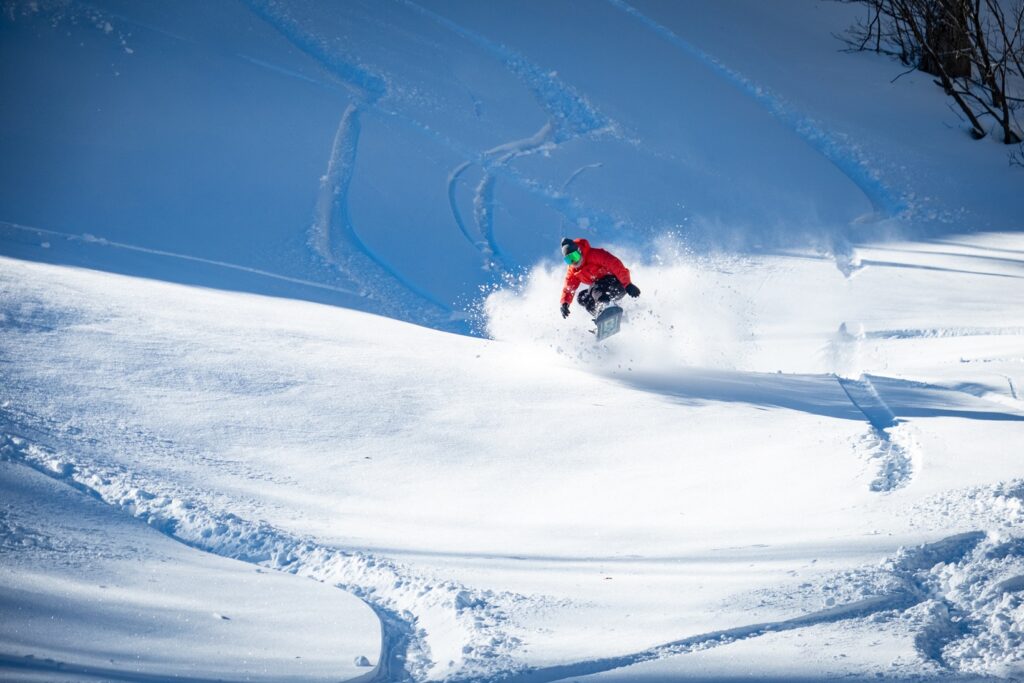
Even the finest powder snow will melt slightly on the surface if exposed to sunlight, turning into hard, crusty ice when temperatures drop overnight. This is where the Nekoma Mountain North Area’s flawless north-facing slopes show their strength.
Since the sun stays low in the sky during winter, north-facing slopes receive almost no direct sunlight. Even the day after a snowfall or late in the afternoon, the fresh, light, airy particles remain exactly as they were first thing in the morning.
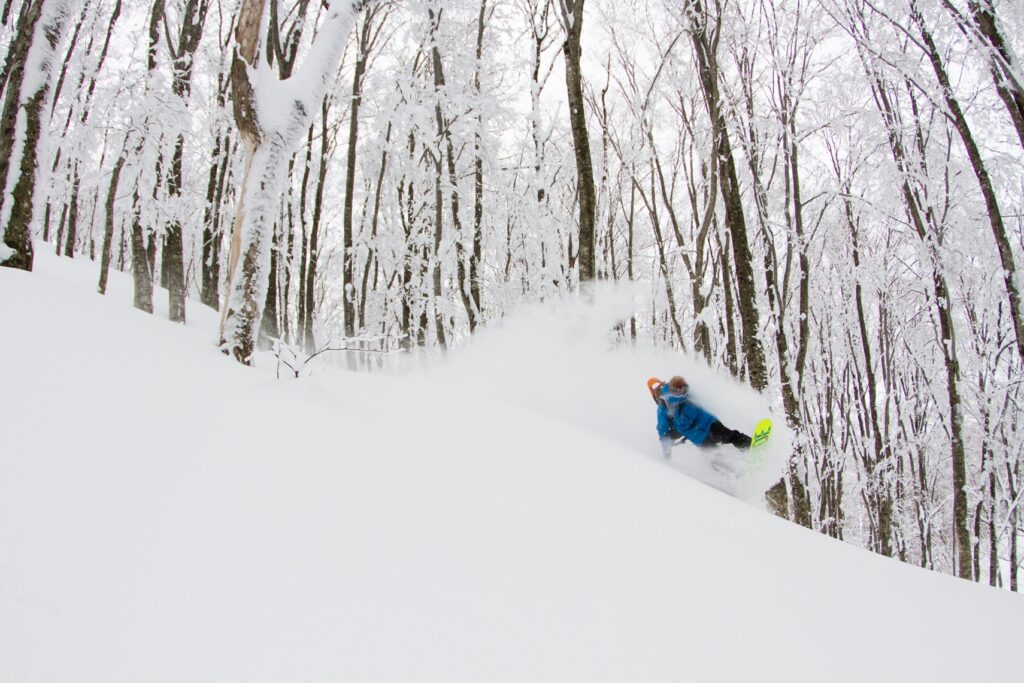
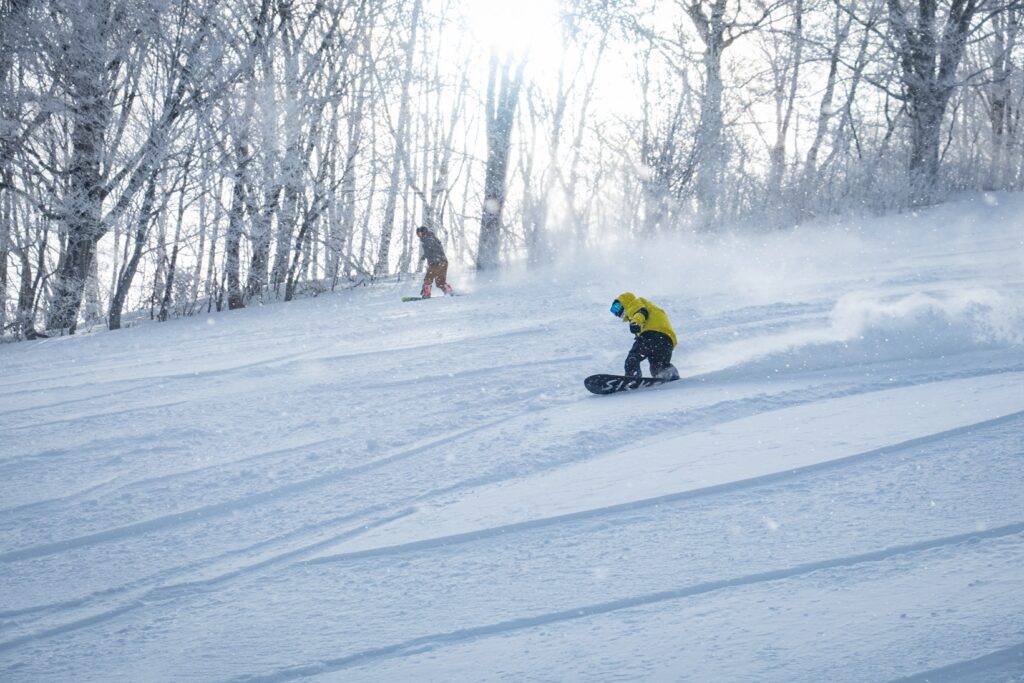
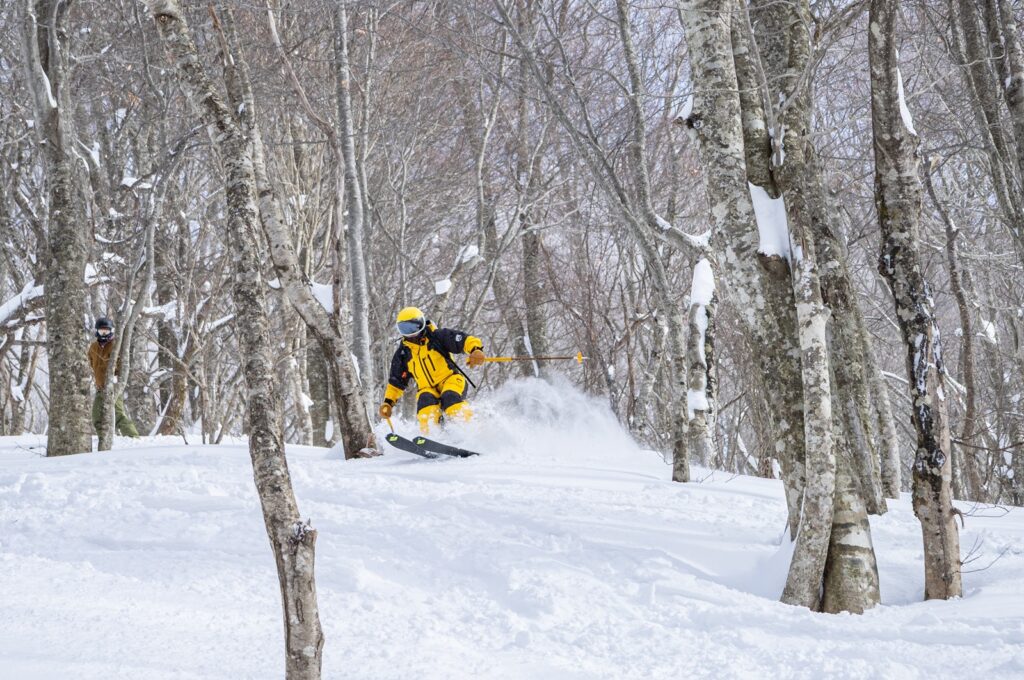
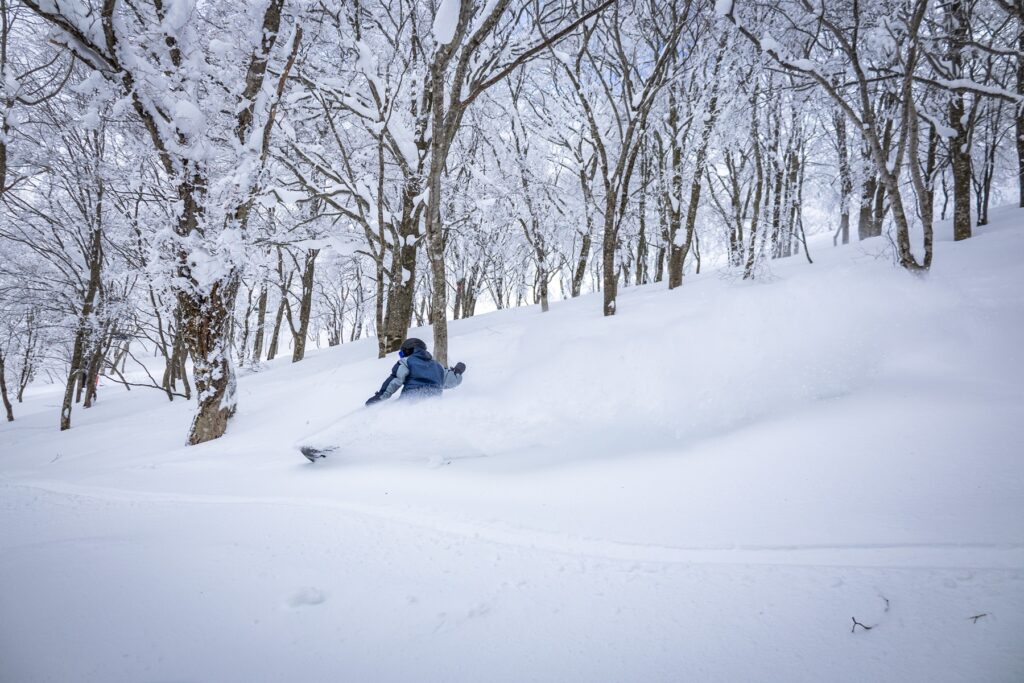
In recent years, tree runs (riding through the woods) have boomed in popularity among skiers and snowboarders. The high-altitude forests around Mt. Bandai, consisting mainly of broadleaf trees like beautiful beech trees, don’t just provide a fun playground—they play a crucial role in preserving pristine snow quality.
The dense trees prevent the powder snow from being blown away or packed down by strong winds. Additionally, the branches and leaves block out sunlight, slowing down snow degradation compared to open terrain. The snow protected by the forest delivers a blissful feeling of floating that becomes utterly addictive. This is a blessing made possible by the perfect combination of altitude and vegetation just below the tree line.
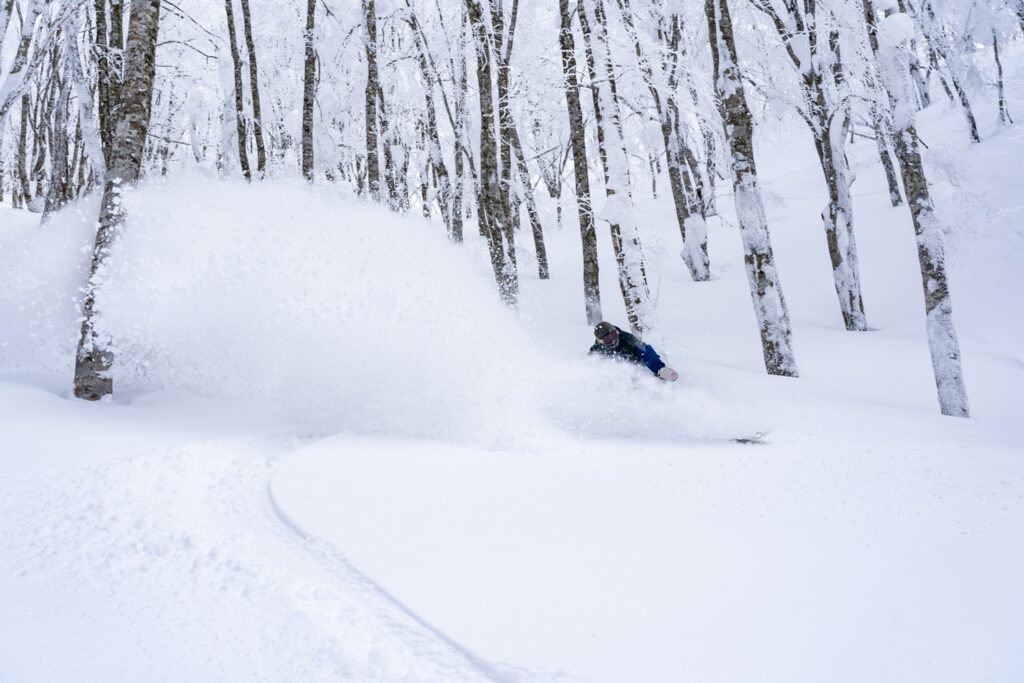
Caution: For tree runs within ski resorts, please only use designated areas where it is officially permitted. Even in permitted areas, search and rescue operations may incur high fees. Do not enter closed areas under any circumstances due to high risks from terrain hazards. Tree runs harbor hidden dangers, such as tree wells, that are not present on open slopes.
Furthermore, areas outside the ski resort boundary are completely unmanaged. The risk of getting lost or caught in an avalanche is extremely high, so do not enter them lightly. If you venture into the backcountry, always go with a local guide who knows the mountains well, ensure you have the proper gear, and file a mountain climbing registration via services like Compass (https://www.mt-compass.com/). Above all, know your limits and do not overexert yourself.
The synergy of these conditions—dry inland winds, high elevation, and north-facing slopes—makes the Aizu Bandai area one of Japan’s premier destinations for a long season.
Typically opening in early December, operations continue for about five months until around Golden Week (early May). Even as spring arrives, the overnight drop in temperature creates surprisingly crisp, high-quality groomed runs in the morning.
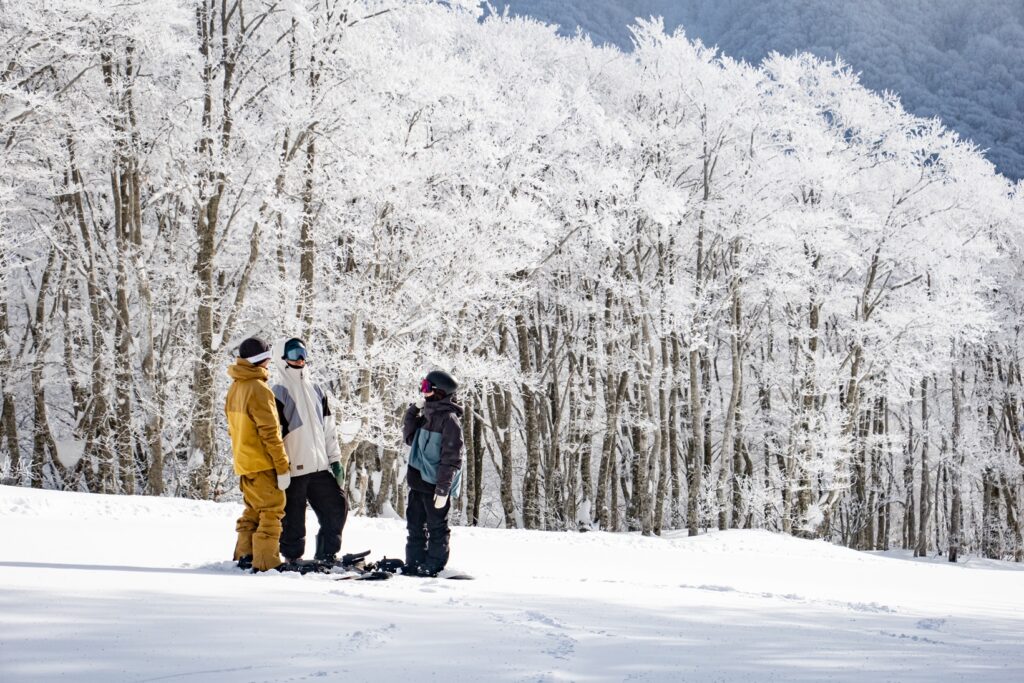
The reason Aizu Bandai has such incredible snow isn’t simply because it’s a “heavy snowfall region.” Its unique terrain and climate work together to create the ultimate powder. While a fresh powder day is obviously unbeatable, even the groomed slopes are so beautifully smooth to ride that you might find yourself thinking you’ve suddenly become a pro.
Indulging in “smoky snow” that makes you feel weightless on a quiet mountain far from the crowds—why not head out to Aizu Bandai this winter to experience this premium snow for yourself?
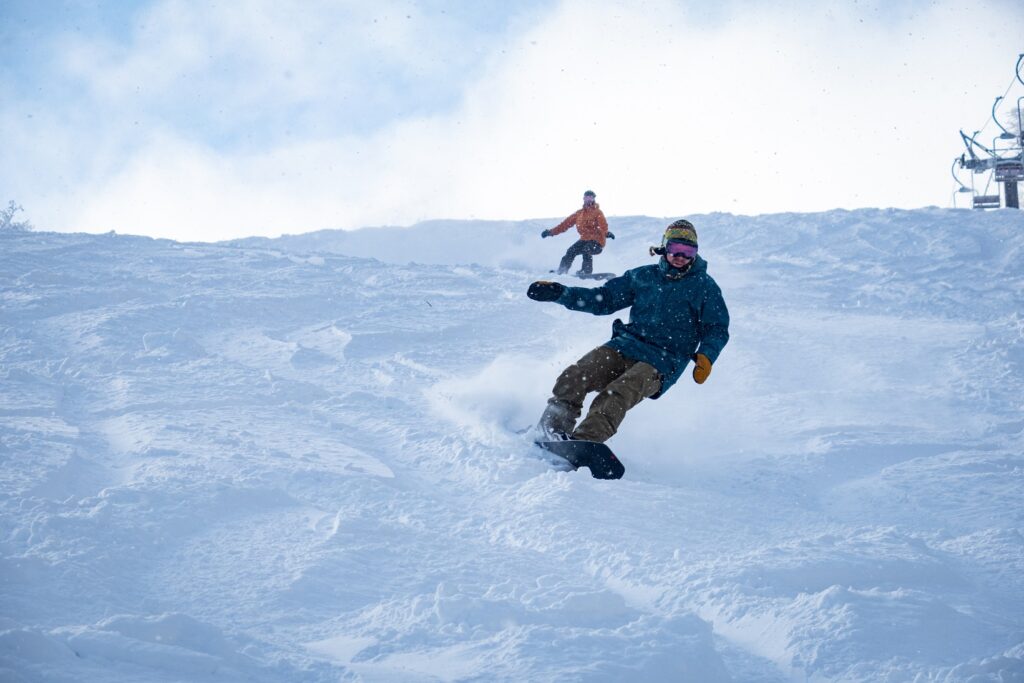
All pics taken at NEKOMA Mountain.